
Who Has Access? Why Modern Businesses in Kenya Need Smarter Access Control
- August 12, 2026
- Sidney Oluoch
- Blog
- No Comments
Beyond Locks and Keys
Think about your workplace on a typical Monday morning. Employees are arriving, visitors are checking in, suppliers are making deliveries, and contractors may be moving between different areas. But at the end of the day, can you confidently answer one question: who had access to your premises?
For modern businesses in Kenya, security is no longer simply about locking the door after working hours. Organizations need better visibility and control over who enters their premises, where they can go, and when they are allowed in. This is where modern access control systems become essential.
Traditional keys provide access, but they offer very little control once they leave your hands. A lost key can be copied; an employee may leave without returning one, and there is often no reliable record showing who entered a restricted area.
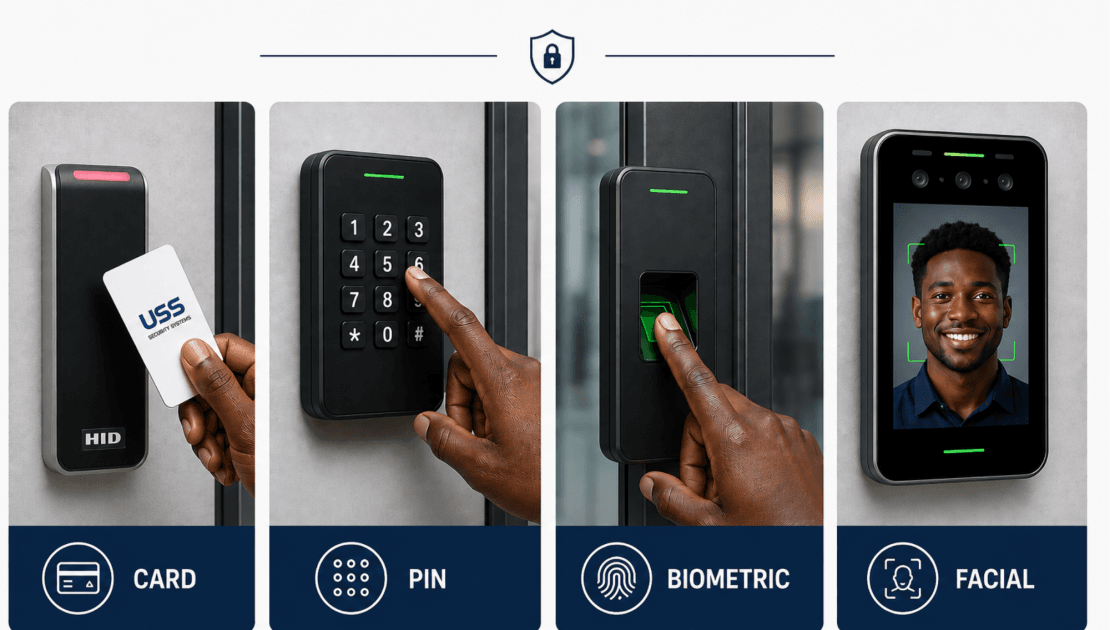
Modern access control replaces this uncertainty with smarter credentials such as access cards, fingerprints, facial recognition, mobile applications, and smart door locks. Businesses can assign permissions based on individual roles and restrict sensitive areas such as server rooms, executive offices, storage facilities or records rooms to authorised personnel.
Know Who Entered and When
Security becomes more effective when businesses have visibility. A centralised access control system can maintain records of entry and exit activity, helping security teams understand who accessed specific areas and when. Organizations thus gain a clearer picture of movement within their facilities.
This information can support security investigations, internal accountability, and day-to-day facility management. It also makes it easier to update or revoke permissions when staff roles change; employees leave, or temporary access is required for contractors and visitors.
Security That Works With Your Business
Every organisation has different security requirements. A small office may need card-based entry, while a larger corporate facility could require fingerprint or facial recognition at critical access points. Mobile-based access can provide additional flexibility by allowing compatible smartphones or wearable devices to function as credentials.
Smart access control systems can also be integrated with entrance control and other electronic security solutions, creating a more coordinated approach to protecting people, property and operations. For growing organizations, a scalable system means new doors, users and security zones can be added as requirements evolve.
Take Control of Who Has Access
As your business grows, managing physical access should become smarter too. USS, a subsidiary of RIANA Group provides access control solutions in Kenya designed around different organizational and security requirements, including card-based access, biometric authentication, facial recognition, mobile credentials and smart door locks.
Know who enters. Control where they go. Protect what matters.
Contact USS today to discover an access control solution designed for your unique business infrastructure.